


 Translate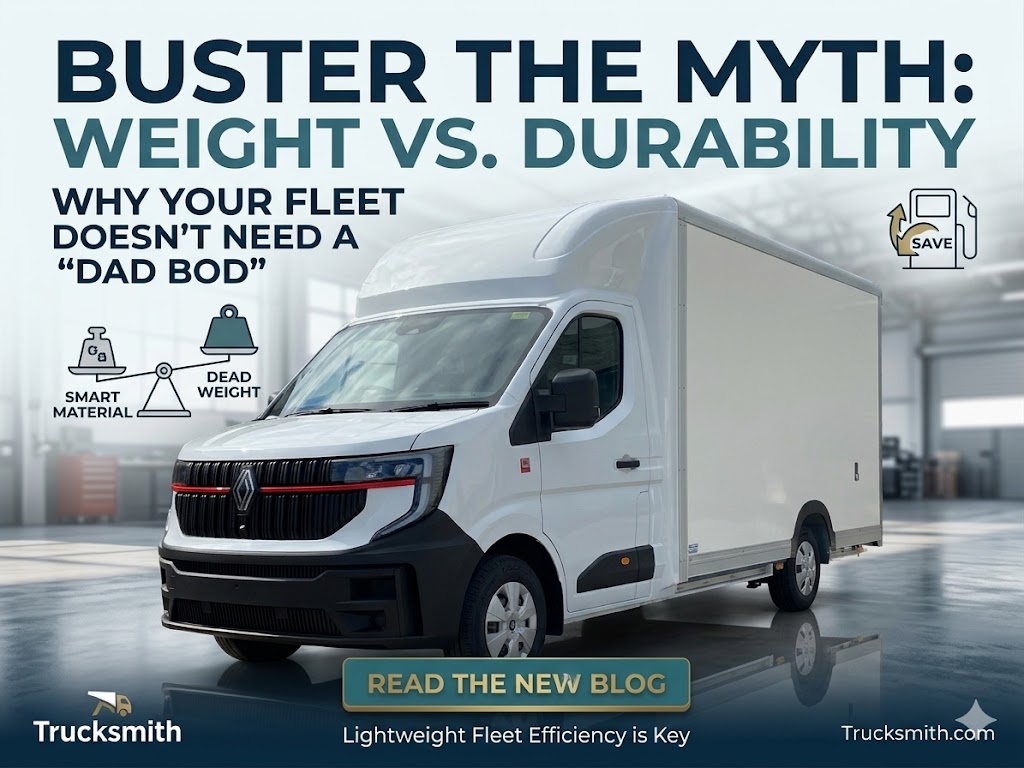
In the world of commercial vehicles, there’s an old-school myth that’s harder to shake than a loose heat shield: the idea that for a truck to be “tough,” it needs to be heavy. We’ve all heard it. The grizzly fleet veteran leaning against a rusted steel fender, muttering, “They don’t build ’em like they used to.”
To which we say: Thank goodness.
If we built them like we “used to,” we’d still be using rotary phones and lead paint. At Trucksmith, we’re here to bust the ultimate industry myth: that durability is a direct byproduct of dead weight.
Strength Isn’t Measured in Tonnes
The “Weight vs. Durability” debate usually implies that a lightweight vehicle is somehow flimsy—a “tin can” on wheels. But in 2026, engineering has moved past the Iron Age. Using advanced composites and aerospace-grade aluminum isn’t about cutting corners; it’s about cutting the fat.
Think of it like an elite athlete. A heavyweight boxer is strong, sure, but a decathlete is lean, agile, and arguably more “durable” over a long, grueling season. By shedding unnecessary poundage, a Trucksmith build reduces the constant strain on the engine, brakes, and suspension.
The Payload Payoff
Every kilogram of “durability” you think you’re getting from a heavy steel frame is a kilogram you can’t put in the back as cargo. Heavy trucks are essentially paying a “weight tax” every time they hit the road, burning more fuel to move their own mass rather than your customer’s goods.
A lighter, smarter build doesn’t just survive the job; it thrives. It offers better fuel economy, lower maintenance costs, and a higher payload capacity.
The Verdict: You don’t need a heavy truck to do heavy lifting. You just need a smarter build. Stop dragging around the “good old days” and start driving the future.
